Lineage Try Lineage

Lineage Cue Sheets

A new way of building music cue sheets.

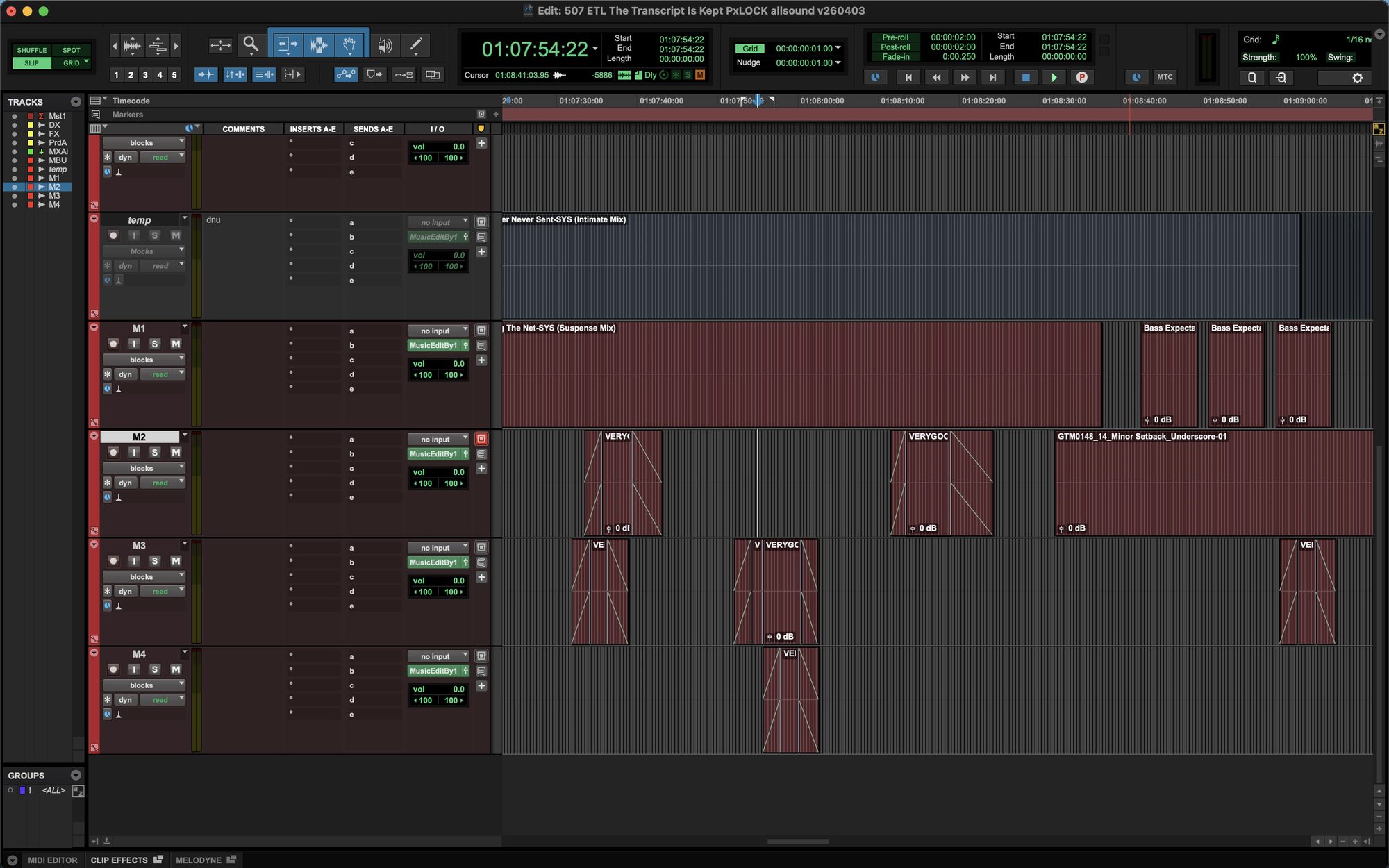
Open your Pro Tools session in the browser. Lineage finds every music cue, works out what each asset's filename means, and searches for the writers and publishers, so your first draft is close to the one you submit.

Free to try. No account needed to build a cue sheet.

Illustrative example · reading one filename

KPMlibrary
1123album
07track
Morning_Lighttitle
30secversion
.wav

↓ search the library, return the cue sheet fields

Title
Morning Light
Library
KPM Music
Composers
Names and shares
Publishers
Names and shares

Try it with your own filename ↓

Why this was built

Lineage was built for three reasons.

01

To help post production staff members keep up with the ever increasing volume of content production and music asset choice.

02

To increase the chances of a rapidly and fastidiously produced version 1 of a cue sheet being intrinsically correct.

03

To boost the likelihood that the v1 is approved by performance rights organizations.

What Lineage is, and isn't

Built for the final document.

Lineage is

  • Where you build the final cue sheetA web app for producing the document you'll submit to the PROs.
  • A quiet interfaceIt reads your sequence file and runs Lineage's analysis and search for you, without getting in your way.
  • LocalYour session file is read in your browser and never uploaded. The only thing sent to our server is the filenames of the assets on your tracks, so they can be decoded and searched.
  • Powered by the Traknam grammar modelsOur own model family works out what the codes and values in each filename most likely mean.

Lineage isn't

  • Project management softwareNot CueDB, not a shared Google Sheet. The teams we spoke with track music upstream in those tools, then copy the data into a final template. Lineage doesn't try to replace them.
  • ExcelCue sheets look like spreadsheets but are highly irregular. Many cells should be linked, and few need hand editing, so the interface works differently. You can still export to XLSX and finish in Excel.
  • Audio fingerprintingLineage works from text: filenames and session data. It doesn't analyze audio. We tried that first and decided it was the wrong route.
  • A guaranteeLineage's job is a very good draft, fast, so you can proof and correct it quickly. Check writers, publishers, merged records and sequence bounds before you submit. As with any search, a result isn't automatically right, but ours is carefully calibrated.

Technology

Three parts of a cue sheet, separate tools for each.

A cue sheet rests on three things. Existing tools leave wide gaps in each, so Lineage builds for them one at a time.

Pillar 1

The timeline

Which records exist, and where each one starts and ends.

Sequence file parsing

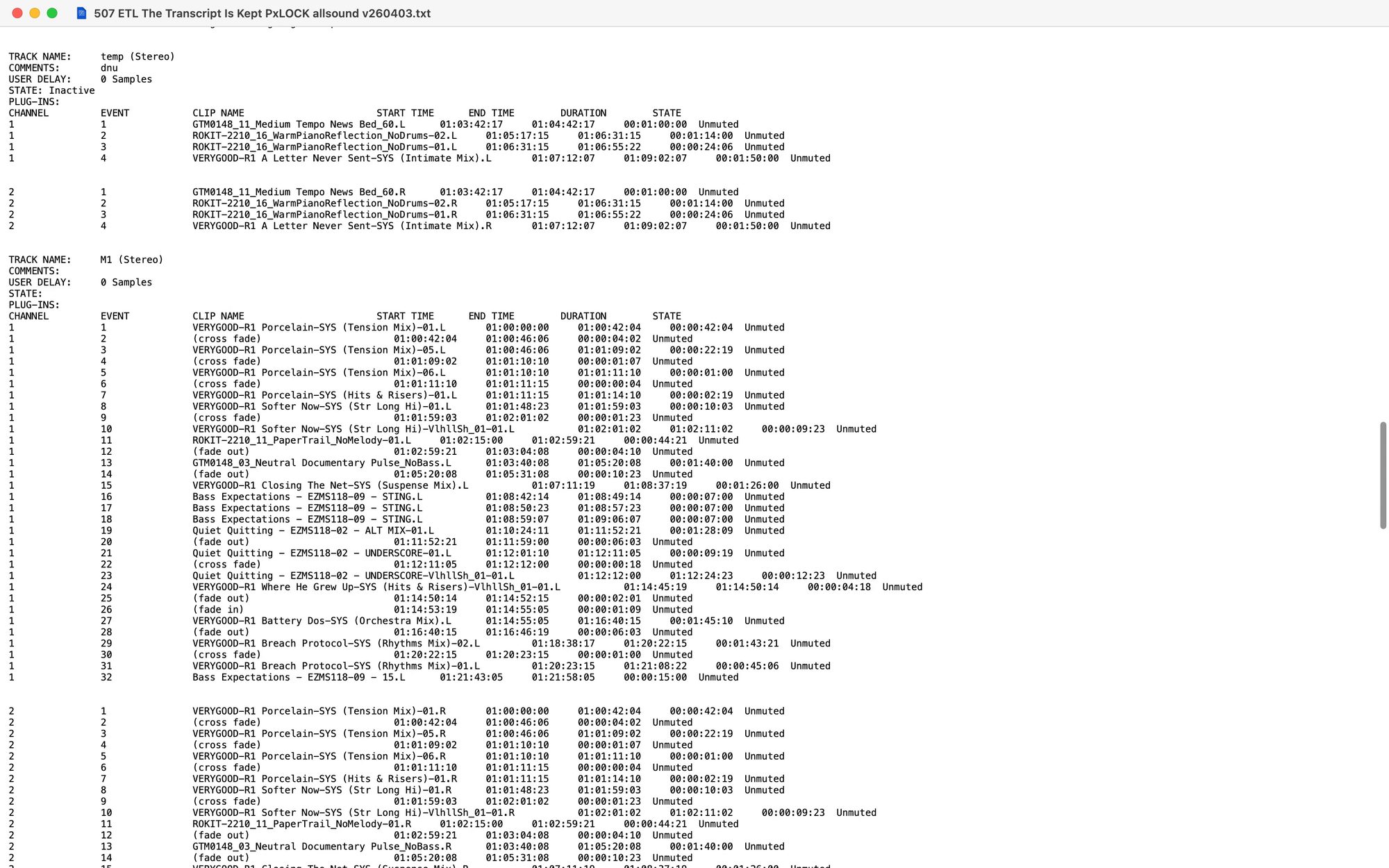
Reads your Pro Tools session and turns scattered clips into clean cue records, consolidating and deduplicating the pieces an edit leaves behind.

Media filename indexer

Splits a filename into its parts and decides what each one is: library code, album, track number, title, version. Try it.

Pillar 2

The attribution

The research and decisions about who wrote and published each cue.

MIAFT search

Multi-input automatic field targeting. A new way to search for a music asset that uses every decoded field at once, aimed at the right library, so each search is cheap and specific.

Library directory

Our index of production music companies and the 2,700+ codes they publish under, and which of them MIAFT can search.

Pillar 3

The presentation

The format your company and the PROs expect to receive.

TemplatizerComing soon

Takes your company's cue sheet template and, with almost no setup, makes it an export format you can choose.

Try the grammar model

Paste a filename. See how Lineage reads it.

This is the media filename indexer from the app, running on a Traknam grammar model. Paste the name of a music file from a session and press Analyze.

Examples:

The filename you enter is sent to Lineage's server to be decoded. Nothing else is.

Contact

Working on cue sheets, or run a music library?

We'd like to hear how you build them today.